What are food ingredients? Roles, applications and food ingredient solutions from AIG
AIG
09/11/2026
According to theFood Processing Ingredients Annual report by the U.S. Department of Agriculture (USDA, April 2026), Vietnam’s food processing industry continues to grow strongly, driving increasing demand for food ingredients. These are the components that shape the texture, flavor, sensory properties and nutritional value of food. Asia Ingredients Group (AIG) is a manufacturer of natural ingredients and a provider of comprehensive ingredient solutions for the life sciences sector, with a diverse portfolio of food ingredients.
Key takeaways
Food ingredients include many groups of components with different functions and properties, used in production and processing to shape the quality, sensory properties, nutritional value and other required characteristics of products.
Food ingredients are widely used in nutrition, beverages, dairy, bakery, confectionery, convenience foods, meat and seafood, with each ingredient group serving different functions in the formulation.
A food ingredients supplier must simultaneously meet requirements for origin, traceability, quality control, certification, supply capacity, ingredient portfolio and technical support.
AIG combines its ingredient supply strengths with in-depth R&D, quality control and supply chain management capabilities, delivering comprehensive solutions from formulation development and supply process optimization to logistics.
AIG’s production, research and logistics system supports various production scales while meeting quality standards and supply requirements for both domestic and international markets.
1. What are food ingredients? The role of food ingredients for manufacturers
Food ingredients are components used in the production and processing of food and beverages that contribute to the final product. This group includes base ingredients, functional components, flavorings and nutritional ingredients, each serving different functions in the formulation.
1.1. Overview of the food ingredients market
Food ingredients include components used in food production and processing, ranging from natural ingredients and processed ingredients to components serving specific functions in a formulation. Depending on their properties and intended use, ingredients can contribute to the texture, flavor, sensory properties, nutritional value and other required characteristics of the finished product.
Food ingredients are key components that shape the quality, sensory properties and nutritional value of finished products
The food ingredients market in Vietnam is closely tied to the growth of the food processing industry. According to the USDA Food Processing Ingredients Annual report (April 2026), Vietnam’s food processing industry reached USD 88 billion in 2025, up 11% from the previous year. This growth is driven by processors expanding production to meet the consumption needs of a market of more than 101 million people, while building Vietnamese food brands in international markets.
1.2. The role of food ingredients
1. Maintaining and improving product quality
Components such as stabilizers, thickeners, emulsifiers and flavorings help control the texture, flavor and sensory properties of products. Choosing ingredients with stable properties also helps businesses ensure consistency between production batches and maintain quality during storage.
2. Optimizing production efficiency and costs
Standardized formulations using ingredients with stable properties help reduce variability during production. When the ratio and function of each component are well controlled, businesses have a stronger basis to optimize large-scale processes and use ingredients efficiently.
3. Supporting research and new product development
A diverse portfolio expands opportunities to test and adjust formulations. Businesses can modify texture, flavor, nutritional value or shelf-life properties to develop new product lines in line with market demand.
4. Meeting consumer trends and expanding markets
Trends such as plant-based foods, sugar reduction, naturally derived ingredients and nutrition-focused products are creating new requirements for formulations. Food ingredients provide more options for businesses to adjust product composition and characteristics according to their development direction.
2. Which industries use food ingredients?
AIG provides food ingredient solutions for many product groups with different requirements for nutrition, texture, flavor and stability. Key application groups include nutrition & functional foods, beverages, dairy, bakery, confectionery, convenience foods, meat and seafood.
2.1. Nutrition & functional foods
AIG supplies vitamins, minerals, proteins, nutritional fat powders and bioactive compounds for the nutrition and functional food industry. These ingredients help enhance nutritional value, build needs-based formulations and support the development of products targeting immunity, digestion, brain development and overall wellbeing.
The solutions are applied in dietary supplements and functional foods in powder, tablet and liquid forms, meeting a variety of product formats. Combining the right ingredient groups also helps businesses control the nutrient content, stability and sensory properties of the finished product.
2.2. Beverages
For the beverage industry, AIG supplies highly soluble ingredients, stabilizers, flavorings and natural extracts. These ingredient groups make products easy to blend, maintain homogeneity, refine flavor and add value to the formulation.
The solutions are applied in ready-to-drink (RTD) beverages, functional drinks and plant-based beverages. Depending on the formulation, ingredients can be combined to develop fruit juices, nutritional drinks, energy drinks or liquid plant-based products.
2.3. Dairy
AIG develops ingredient solutions for the dairy industry with calcium, protein and vitamin fortification components, as well as specialized stabilizer systems such as Prosol® Yomix and YoBlend. These ingredient groups both add nutritional value and help control product texture and stability.
AIG’s ingredient solutions support nutritional fortification and stable texture in dairy products
Prosol® Yomix and YoBlend help limit syneresis and whey separation while maintaining a smooth texture and creamy mouthfeel in fermented dairy products. Dairy ingredient solutions are applied in milk powder, condensed milk, yogurt, fermented milk and ice cream, with formulations tailored to the characteristics of each product.
2.4. Bakery
AIG supplies ingredients such as gluten, citrus fiber, stabilizers, preservatives, extracts and cereal pastes for the bread and baked goods industry. These components help build structure, control moisture, maintain softness and add nutritional value to products.
Gluten contributes to structure, citrus fiber helps retain moisture and adds dietary fiber, while stabilizers and preservatives help maintain quality during storage. The solutions are used in bread, biscuits and many other baked goods, depending on texture and sensory requirements.
2.5. Confectionery
AIG supplies pectin, gelatin, jelly blends and specialized jelly gum systems for confectionery formulations. These ingredients create gel structures with different properties while providing a base for combining flavors and other added components.
Depending on the formulation, the ingredient system can create a characteristic chewy, crunchy or elastic texture, refining the eating experience and increasing product value. The solutions are applied in candy, chocolate, jelly and gummies, with textures tailored to each product line.
2.6. Convenience foods
AIG provides solutions including starches, vegetable oils, meat, seafood and mushroom extracts, as well as textured vegetable protein for convenience foods. These ingredients contribute to taste, texture and nutritional value while meeting industrial processing requirements.
Starches and texturizing ingredients help products remain stable after heating, while vegetable oils, extracts and flavor components enhance palatability. Textured vegetable protein is used to create texture in meat alternatives. These solutions are applied in instant noodles, nutritional porridge and other instant foods.
2.7. Meat & seafood
AIG provides ingredient solutions for meat and seafood, including collagen, texturizing and emulsifying ingredients, preservatives, colorants, moisture-retaining starches, fillers, flavor enhancers and flavorings. These ingredient groups are combined to control the texture, color, flavor and stability of processed products.
AIG supplies a diverse range of functional ingredients to support the development of processed meat and seafood products
Collagen, texturizing and emulsifying ingredients, and starches support binding, moisture retention and texture, while colorants, flavor enhancers and flavorings refine sensory properties. The solutions are applied in sausages, fish cakes, processed meats and frozen seafood, depending on formulation and production process requirements.
>>> Each product category requires a different combination of ingredients, so building ingredient solutions for businesses based on actual product needs is often more effective than selecting individual components separately.
3. Criteria for choosing a reputable food ingredients supplier
A food ingredients supplier must not only ensure ingredient quality but also maintain a stable supply and support businesses throughout product development. Origin, quality control, supply capacity, ingredient portfolio and technical services should all be considered together.
3.1. Clear and traceable ingredient origin
Clear ingredient origin helps businesses control provenance, batch information and related documentation throughout receiving, production and distribution. As food safety management increasingly emphasizes supply chain traceability, the ability to provide complete ingredient information has become a key criterion when choosing a supplier.
Businesses should prioritize partners that fully manage certificates of origin, ingredient documentation and batch-level information, and can provide them when needed for inspection or verification. Transparent documentation not only supports incoming quality control but also helps businesses respond proactively when issues arise with ingredients or finished products.
3.2. Quality control processes and food safety certifications
A food ingredients supplier needs an internal quality control system to manage ingredients from production and storage to distribution. Standards such as ISO 9001:2015, HACCP, ISO 22000 and FSSC 22000 are important benchmarks for assessing the maturity of quality and food safety management systems.
Beyond reviewing certifications, businesses should also check the scope and validity of each certification to ensure it fits the ingredients and intended use. A rigorous control system helps limit quality variation between batches and provides a basis for maintaining product consistency during production.
3.3. Stable production and supply capacity at sufficient scale
A food ingredients partner needs sufficient production, inventory, distribution and logistics capacity to meet continuous ingredient demand. Especially for large-scale manufacturers or products with steady output, the ability to maintain on-time supply directly affects production planning.
When ingredient supply is disrupted, a business’s production line may have to be adjusted or halted, affecting delivery schedules and business plans. A supplier with well-coordinated warehousing, transportation and distribution systems therefore helps businesses reduce the risk of supply disruption and maintain stable production.
3.4. A diverse portfolio of ingredient solutions for multiple industries
A diverse ingredient portfolio gives businesses access to many ingredient groups within a single supply system, from nutritional ingredients, proteins and fibers to stabilizers, flavorings, fats and functional components. This is especially valuable for businesses developing multiple product lines or frequently researching new formulations.
Working with a partner that can meet multiple ingredient needs reduces operating and supplier management costs while making it easier to align documentation, quality standards and supply processes. Businesses can also shorten ingredient sourcing time when expanding into new product categories or formulations.
3.5. End-to-end services: OEM/ODM, logistics and product development support
An ingredient supplier can do more than supply ingredients and become a partner throughout product development. Beyond logistics, research and formulation optimization, OEM/ODM capabilities extend support from concept development and product finalization to organizing production according to the business’s requirements.
Working with an R&D team, businesses receive support in selecting ingredients and adjusting formulations to meet requirements for texture, flavor or product stability. Combined with OEM/ODM capabilities and a logistics system, these services form a support chain from research and production to supply, rather than stopping at ingredient provision.
>>> For products with specific requirements for texture, flavor or stability, AIG also offers customized ingredient solutions tailored to each business’s formulation goals.
4. Why should businesses choose AIG as their food ingredients partner?
AIG combines its ingredient portfolio with applied research, quality control and supply chain capabilities serving many food product groups. This system provides a foundation for businesses to access ingredient solutions aligned with formulation development, production optimization and supply organization requirements.
4.1. Pioneering research and development capabilities
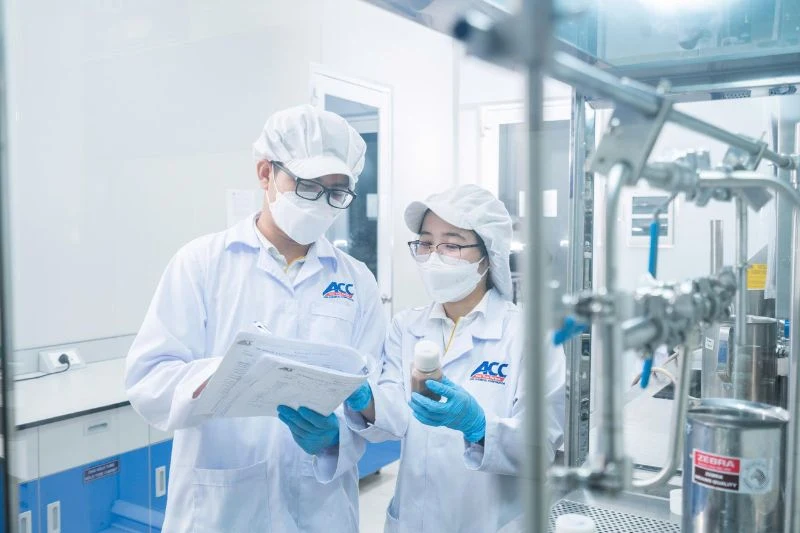
AIG develops ingredient research and application capabilities to help businesses test, refine and optimize formulations before production. AIG’s Research and Application Innovation Center, together with the R&D team of Asia Chemical Corporation (ACC), a member of AIG, supports ingredient application testing and formulation optimization according to product requirements.
AIG’s R&D capabilities support formulation optimization and food product development
Applied research capabilities allow product development to be assessed from multiple angles at once, including ingredient properties, texture, stability and manufacturability. AIG has also developed technologies such as spray drying, UHT and precision blending systems to support testing and finalizing formulations across many product formats.
4.2. Internationally certified quality management system
Companies within the AIG ecosystem apply numerous quality and food safety management standards, including ISO 9001:2015, HACCP, ISO 22000, FSSC 22000, SQF and IFS.
In addition to management systems, certain product groups within the AIG ecosystem hold certifications suited to specific markets and application requirements. Combining quality management systems with relevant standards and certifications gives businesses a stronger foundation when developing products for domestic and international markets.
4.3. Extensive distribution and supply network
AIG has developed a warehousing and logistics system serving a range of storage conditions, combining warehouse management, specialized transport vehicles and cargo tracking technology. The logistics system includes cold, chilled and ambient warehouses, along with a transport network of specialized trucks, containers and tankers, helping maintain ingredient quality during storage and distribution.
AIG’s supply network serves ingredient distribution needs in both domestic and international markets. Its logistics capabilities, combined with a supply chain management system, help businesses take a more proactive approach to inventory planning, transportation and ingredient supply.
4.4. Comprehensive solutions, partnering with businesses
What sets AIG apart is not only its ingredient portfolio but also its ability to connect ingredients with applied research, quality control and the supply chain. This approach allows businesses to go beyond sourcing individual ingredients and access solutions that fit the specific requirements of their products and production processes.
Starting from initial needs, AIG supports businesses in selecting ingredients, researching and optimizing formulations, testing applications and adjusting solutions to product characteristics. Its production, quality management and logistics capabilities further support implementation at the appropriate scale, connecting the formulation development stage to ingredient supply for production.
For businesses preparing to launch new products, AIG’s food product development solutions for 2026 are delivered step by step, from formulation research and testing to production.
5. Frequently asked questions about food ingredients
5.1. How do food ingredients differ from food additives?
Food ingredients is a term referring to the components used in food production to create or adjust certain characteristics of a product. Food additives are a group of substances added to perform specific technological functions, such as thickening, stabilizing, emulsifying, gelling or adjusting acidity.
5.2. What criteria should businesses consider when choosing a food ingredients supplier?
Businesses should consider ingredient origin, traceability, quality control systems, certifications, supply capacity and product portfolio together. In addition, technical support and formulation development capabilities are important factors when choosing a supplier for new product projects.
A supplier with comprehensive capabilities helps businesses reduce dependence on individual ingredient sources. At the same time, technical exchange and supply management become easier to organize when services are connected within a single system.
5.3. Which food ingredient groups does AIG currently supply?
AIG supplies many ingredient groups, such as vitamins, minerals, proteins, fibers, stabilizers, flavorings, fats and other functional components, for applications in nutrition, beverages, dairy, bakery, confectionery, convenience foods, meat and seafood. The ingredient portfolio is backed by applied research capabilities, helping businesses find solutions for their specific product requirements.
5.4. How can businesses partner with AIG as a food ingredients supplier?
Businesses can contact AIG to discuss ingredient needs, product requirements and production scale. Our expert team will provide advice on ingredient solutions, applied research and formulation optimization aligned with product development goals.
Food ingredients play a key role throughout food development and production, from shaping texture, flavor and nutritional value to controlling the stability of finished products. The diversity of ingredients also gives businesses more room to innovate formulations, develop products and meet increasingly specific market requirements.
With a diverse ingredient portfolio, applied research capabilities, a quality management system and a well-coordinated supply chain, AIG provides food ingredient solutions for many food and beverage categories. Businesses looking for ingredients or developing new formulations can reach out to AIG to identify the right ingredient groups and application solutions for their product requirements.
Asia Ingredients Group (AIG) – A leading group in Vietnam in natural ingredient manufacturing and comprehensive ingredient solutions for the life sciences sector.
What is Yeast Protein? A next-generation protein solution for the sustainable food industry
The growth of high-protein foods is expanding demand for new protein sources that offer nutritional value and versatile applications. Yeast Protein derived from Saccharomyces cerevisiae yeast is one of the ingredients attracting attention thanks to its protein foundation, sensory properties and sustainable production approach. Asia Ingredients Group (AIG) provides Yeast Protein solutions, combined with applied [...]
08/11/2026
Research and Development
What are nutrition ingredients? Nutritional ingredient solutions from AIG
Nutrition Ingredients are increasingly used in foods, beverages and nutritional products thanks to their ability to add nutritional value and support formulation development. Asia Ingredients Group (AIG) supplies a range of nutrition ingredient groups backed by research, application and supply capabilities, helping businesses choose the right solutions for their product goals. Key takeaways: Nutrition Ingredients [...]
10/10/2025
Events
AIG showcases Vietnamese agri-food excellence at Anuga 2025, expanding its presence in Europe
From October 4 to 8, 2025, Asia Ingredients Group (AIG) took part in Anuga 2025 in Cologne, Germany. This marked the company’s third time joining Vietnamese exhibitors at one of the world’s most prestigious and influential food and beverage trade fairs. Bringing together more than 7,800 exhibitors from 118 countries and attracting over 160,000 international [...]
26/09/2025
Events
AIG Honored Among Vietnam’s Top 25 Leading Brands 2025
On September 25, 2025, Asia Ingredients Group (AIG) was proudly recognized among the Top 25 Leading Brands of 2025 in the manufacturing and services sector, a key pillar of Vietnam’s sustainable growth strategy, as selected by Forbes Vietnam. This achievement further affirms AIG’s position as a market leader. Forbes Vietnam, part of the globally renowned [...]
28/07/2025
Events
AIG Leads the Way in Deep Processing and Sustainable Agricultural Value Chains in Vietnam
On the afternoon of July 25, 2025, Asia Ingredients Group (AIG) welcomed Mr. Nguyen Quynh Thien, Vice Chairman of the People’s Committee of Vinh Long Province, along with representatives from local departments and agencies, for a working visit to Asia Coconut Processing Joint Stock Company (ACP) – a key member of AIG’s high-quality agricultural processing [...]
23/06/2025
Events
APIS and ACP support young F&B entrepreneurs at “KHỞI 2025”
On June 19, 2025, APIS and ACP—two member companies of Asia Ingredients Group (AIG)—participated as key partners in the “KHỞI 2025” forum held in Ho Chi Minh City. The event brought together nearly 150 entrepreneurs, startup founders, and industry experts in the food and beverage (F&B) sector to connect and explore sustainable business solutions. Comprehensive [...]
 EN
 VI